Contents
-
Get Started
-
Release Notes
-
Core Platform
- API Reference Guide
- Cache Services
- Debugging
- Filters
- How To Video - The Join Activity Pattern
- How To Video Shorts: Calling Procedures by Properties
- How To Video Shorts: SplitByGroup
- How To Video Shorts: The Vantiq API
- How To Video Shorts: The Vantiq IDE
- How To Video Shorts: The Vantiq Version Control System
- IDE User’s Guide
- Resource Reference Guide
- Sharing Resources
- Storage Managers Reference Guide
- Transformations
- VAIL Reference Guide
- Web-Based APIs
- Show Remaining Articles ( 2 ) Collapse Articles
-
Concepts & Architecture
-
Developer Guides
- VANTIQ Developers Guide - Introduction to Intelligence in VANTIQ Applications
- VANTIQ Developers Guide Series – Server Development Standards
- VANTIQ Developers Guide Series – Client Builder Development Standards
- VANTIQ Developers Guide Series - Designing VANTIQ Applications
- VANTIQ Developers Guide Series - Introduction to VANTIQ Development
-
AI & GenAI
- Agents
- Conversation
- Create a MCP Server in a Vantiq Project
- GenAI Builder Guide
- GenAI Builder Tools
- GenAI Builder Tutorial
- Generative AI Functions (Tools)
- How To Video Shorts - LLM Playground
- How To Video Shorts: AI Tools (Functions)
- How To Video Shorts: Multi-Modal Example
- How To Video Shorts: Using Generative AI in Applications
- How-To Videos: AI Design Model Assistant
- How-To Videos: AI Documentation Search
- LLM Reference Guide
- Managing AI Conversation
- Open Inference
- Open Inference Guide
- Semantic Search Guide
- Streaming AI Output
- Supporting Semantic Search
- Show Remaining Articles ( 5 ) Collapse Articles
-
Collaboration
-
Client Development
- Client Builder
- Client Builder Reference Guide
- Client Builder User’s Guide
- Client Components
- Client Components User's Guide
- Client Styling User’s Guide
- Client to Component Conversaion
- Dynamic Client Content
- Dynamic Map View Widget
- Floor Plan
- How To Video Shorts: Client Layouts
- How To Video Shorts: Client CSS
- Layout Management User’s Guide
- Public Clients
-
Assemblies
-
Operations, Deployment & Admin
- Administrators Reference Guide
- CLI Reference Guide
- Deployment
- Deployment Reference Guide
- Deployment Tool User’s Guide
- Diagnosing Faults and Scalability Issues In Vantiq Applications
- Discovering Current Session Information
- External Lifecycle Management Guide
- How To Video Shorts: Invite Other Users to Your Namespace
- How To Videos: Secrets
- Monitoring with Grafana
- Production Applications Best Practices
- Reliable Messaging Guide
- Security Secrets
- User and Namespace Administration
- Vantiq Edge Reference Guide
- Workload Management
- Show Remaining Articles ( 2 ) Collapse Articles
-
External Sources & Integrations
- AMQP Reference Guide
- CHATBOT Reference Guide
- Email Reference Guide
- Enterprise Connectors Reference Guide
- External Sources Reference Guide
- Google Cloud Pub/Sub Reference Guide
- How To Video Shorts: How to Create a Built-In Source
- Image Processing Guide
- KAFKA Reference Guide
- MQTT Reference Guide
- Push Notification Reference Guide
- Remote Reference Guide
- SMS Reference Guide
- Sources
- Using the Video Sources
- Video Reference Guide
- Show Remaining Articles ( 1 ) Collapse Articles
-
Service Development
-
Catalog
-
Design Modeler
-
Testing
-
Branding & White-Labeling
< All Topics
Print
Posted
Updated
ByLisa Ackerman
0 out of 5 stars
| 5 Stars | 0% | |
| 4 Stars | 0% | |
| 3 Stars | 0% | |
| 2 Stars | 0% | |
| 1 Stars | 0% |

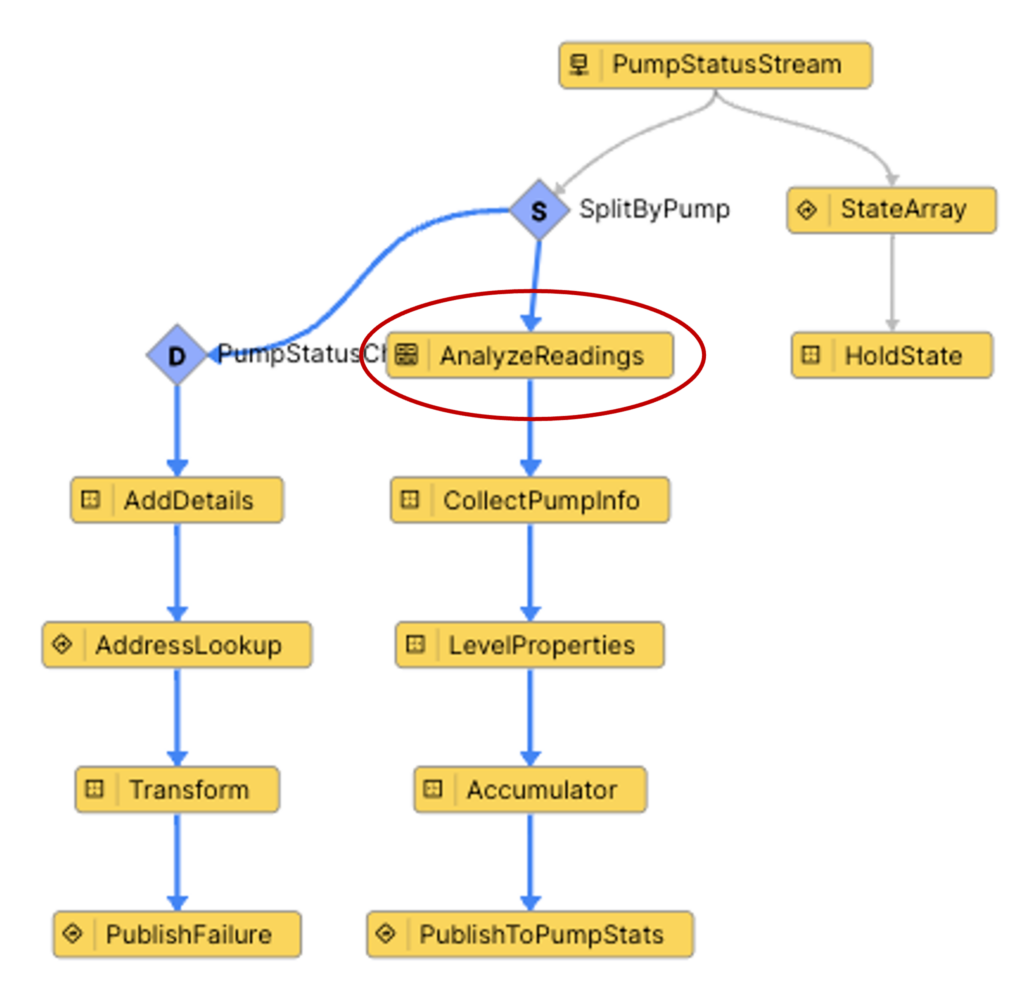
Visual Event Handlers within Services consist of pre-built Activity Patterns that are configured as needed for event processing. Two of these are ComputeStatistics and Analytics.
- Located in the Math category
- Collect cumulative information on events
- The Service manages the state for these activity tasks
- Developers access the state from auto-generated procedures
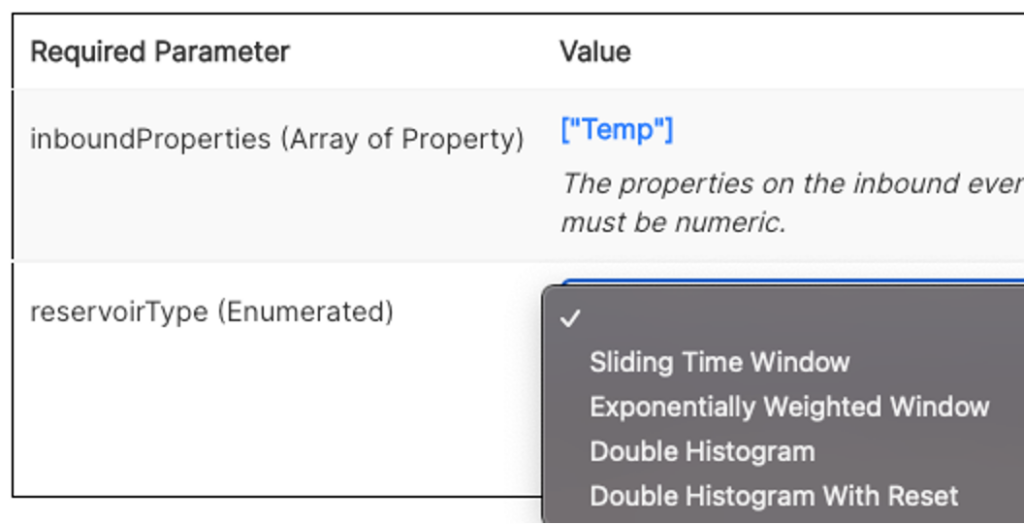
ComputeStatistics
This Activity Pattern accepts properties (integer or real) of an Event, and computes cumulative mean, min, max, median and standard deviations for the time duration specified by the developer.
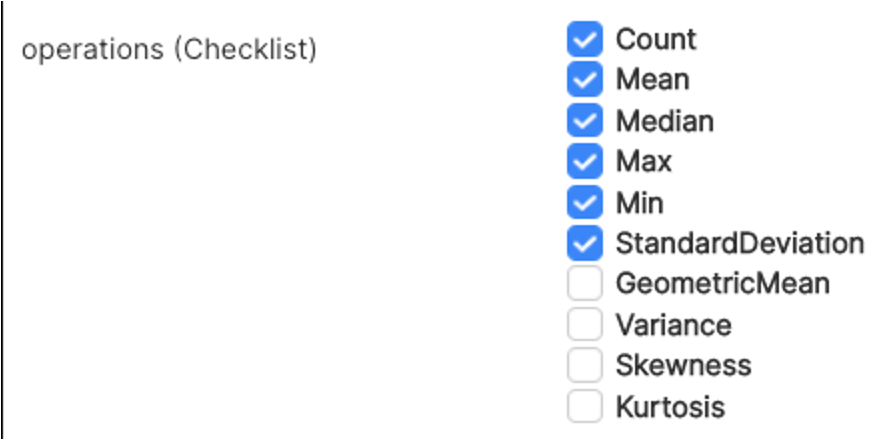
Analytics
Analytics computes everything that ComputeStatics can, as well as several more statistics, as shown above. For both ComputeStatistics and Analytics, the task State is managed and made accessible by the State.
Was this article helpful?
0 out of 5 stars
| 5 Stars | 0% | |
| 4 Stars | 0% | |
| 3 Stars | 0% | |
| 2 Stars | 0% | |
| 1 Stars | 0% |
5