

Riverton · Public Safety
A city emergency operations centre where specialist agents triage incoming signals, coordinate the response across agencies, and hand every consequential call to a human.
com.vantiq.ps
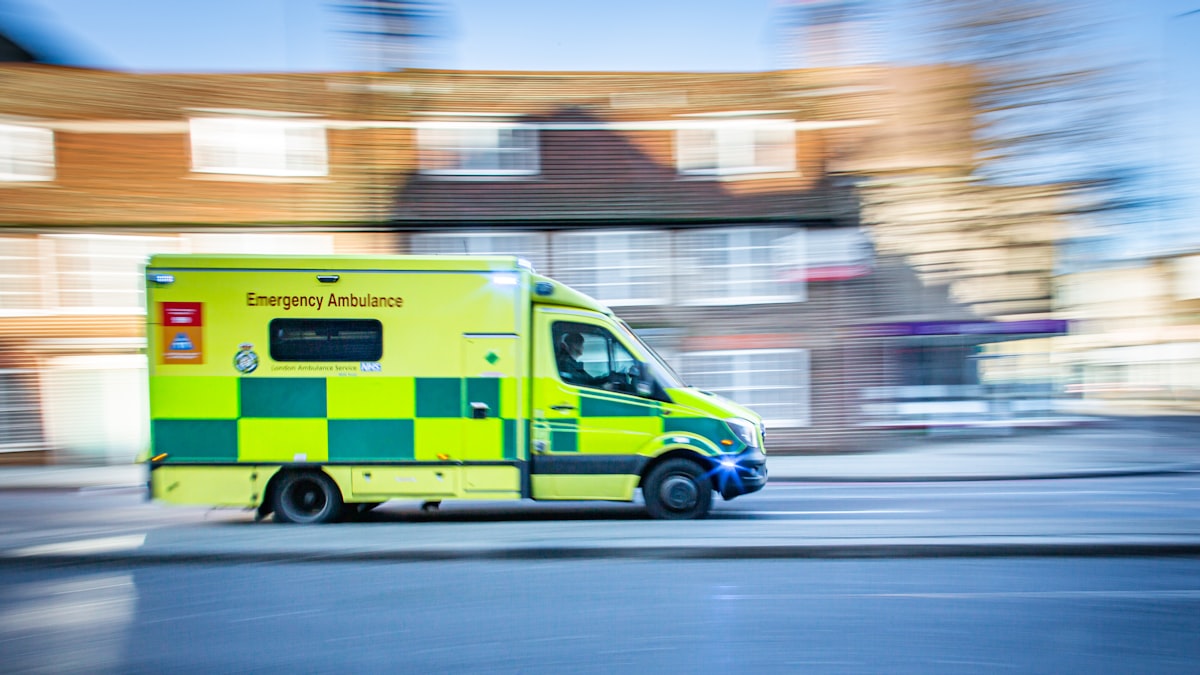
A city emergency operations centre. Incoming 911 calls and sensor signals are classified, correlated against active incidents, and either attached as fused context or opened as a new incident with a severity and risk score. Specialist agents then fan out across fire, EMS, traffic, infrastructure, campus and public communications, and the response runs through dispatch, mutual aid, public alerting and recovery, with a dispatcher approving anything consequential. Classification runs on a deterministic standard-operating-procedure table; where a generative credential is configured a GenAI procedure may override it, and which path produced the answer is always recorded.
Agent roster
All 11 agents in this demo.
What this demo shows
The moments worth walking a prospect through.
Deterministic rules, with GenAI allowed to argue
The SOP classification table runs first and always. A generative procedure may override it by reasoning over the free-text summary, but either path is written into provenance, so an operator can see which one produced the classification rather than trusting a black box.
Signal fusion into one incident
A signal matching an active incident in the same district and class within a two-hour window attaches as fused context rather than opening a duplicate, so one event reported three ways stays one incident.
Cameras classified by what they saw
Every other sensor names its own incident class, but a camera reports lane blockages, smoke columns and crowd surges alike. A keyword table over the scene summary decides between fire, hazmat, flood, crowd safety and collision, and the matched keyword goes into the reasoning trace.
A plottable incident whichever signal opened it
When two signals in the same moment resolve to the same class and race to open the incident, the correlating branch backfills a missing location from whichever signal has one, so the incident lands on the map either way.
Low-impact actions run, consequential ones don't
Classification is advisory and runs automatically; anything with operational consequence routes to a human. Everything either path does is audited.
Eleven specialists on one incident
An incident doesn't belong to one agent. Fire, infrastructure, traffic, campus and the rest each produce their own recommendation on the same incident, and a collaboration opens with a commander and a lead agency assigned, so the response is coordinated rather than a pile of parallel alerts.
Only the agents that should engage, engage
A fire at a substation brings in fire, infrastructure and traffic while the campus agent correctly stays out. Relevance is decided per incident, so an operator isn't reading recommendations from agents with nothing to contribute.
Live conditions change the response
The fire agent fuses live wind into the evacuation zone it recommends, so that a 32 mph wind produces an 800 m zone and the perimeter reflects the conditions at the time rather than a fixed radius from a table.
Public alerts held behind a guardrail
Anything going to the public queues for public-information sign-off and stays pending until a human releases it. An agent can draft the alert; it cannot publish one.
Mutual aid negotiated across agencies
When the incident outgrows local resources, mutual-aid negotiation resolves against neighbouring agencies modelled as genuinely external parties, so the hand-off crosses an organisational boundary rather than being assumed.
Three live source types, and an edge that keeps working
Video, MQTT sensor and SMS sources all feed the same intake path, and edge store-and-forward keeps the centre functioning through a connectivity loss rather than dropping what happened during it.
Oversight of the agents themselves
Human overrides and drift and bias monitoring are first-class views, so the question of whether the agents are still behaving correctly has a place to be answered on screen.
Through to recovery, not just response
The incident lifecycle carries an escalation timer and continues past the emergency into recovery operations, with KPI snapshots capturing how the response actually performed.
Demo gallery
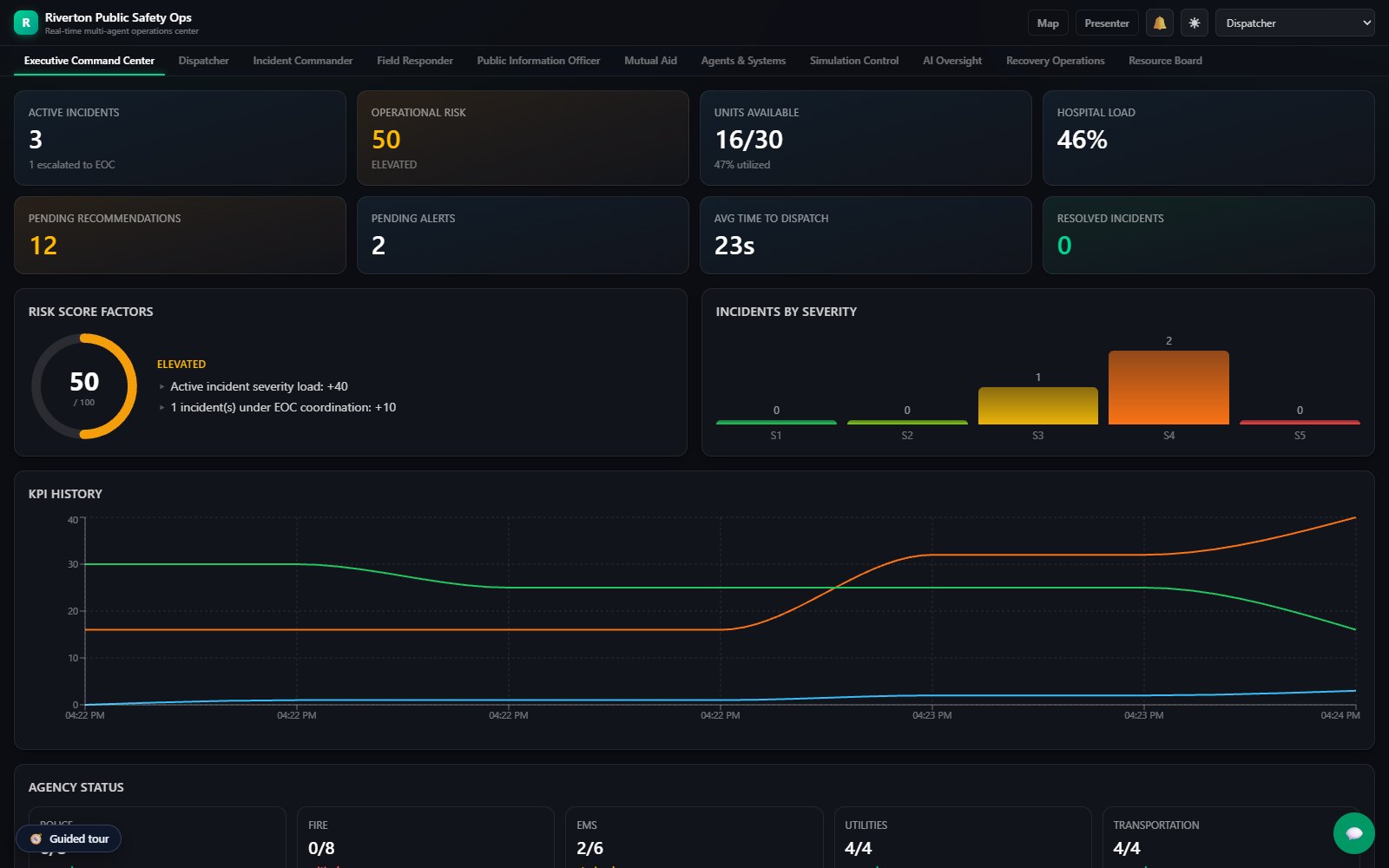 Executive Command Center: active incidents, a scored risk level with its contributing factors, unit availability and pending decisions, over live KPI history.
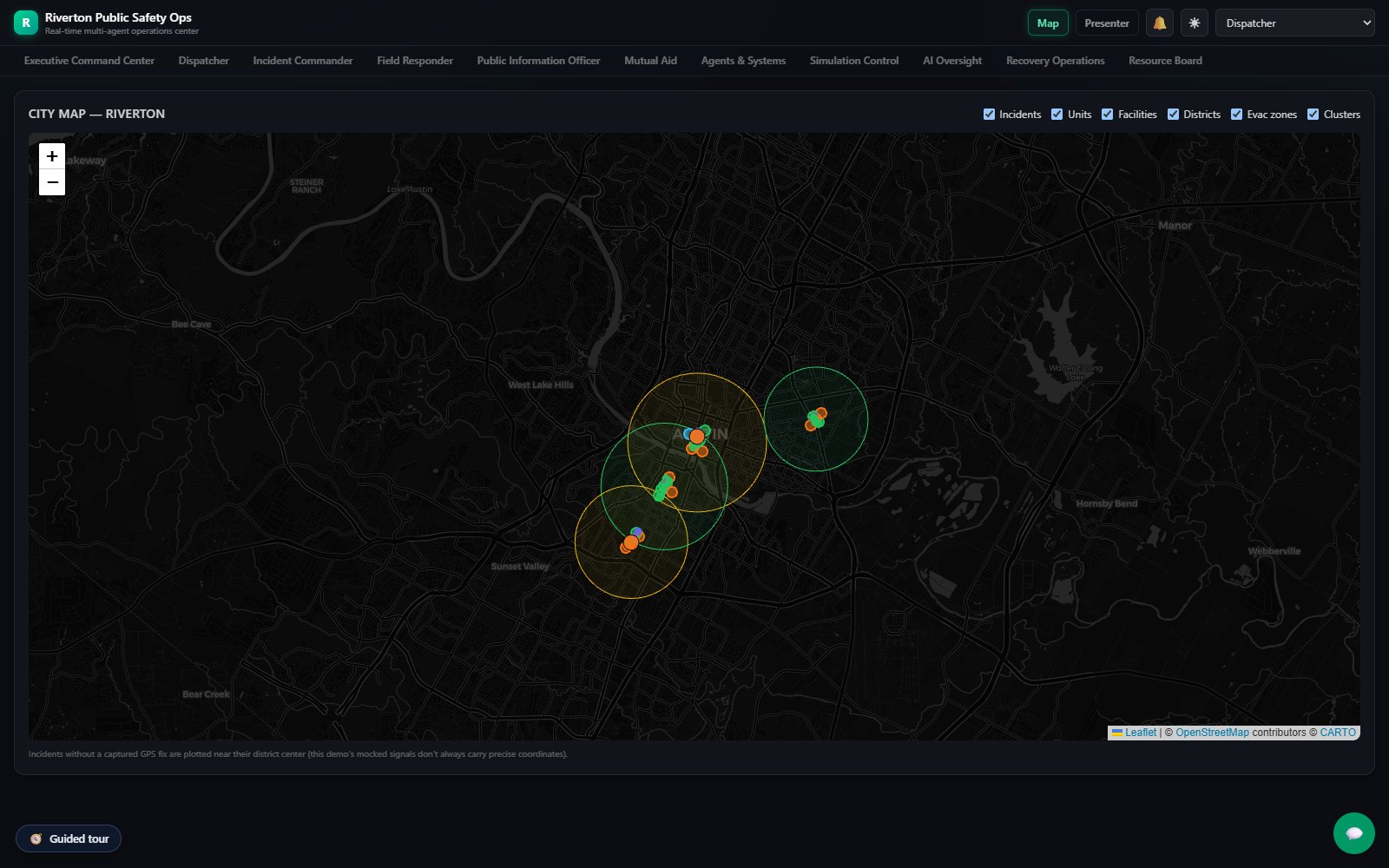 City map: incidents, evacuation zones, unit positions and district overlays on one operational picture.
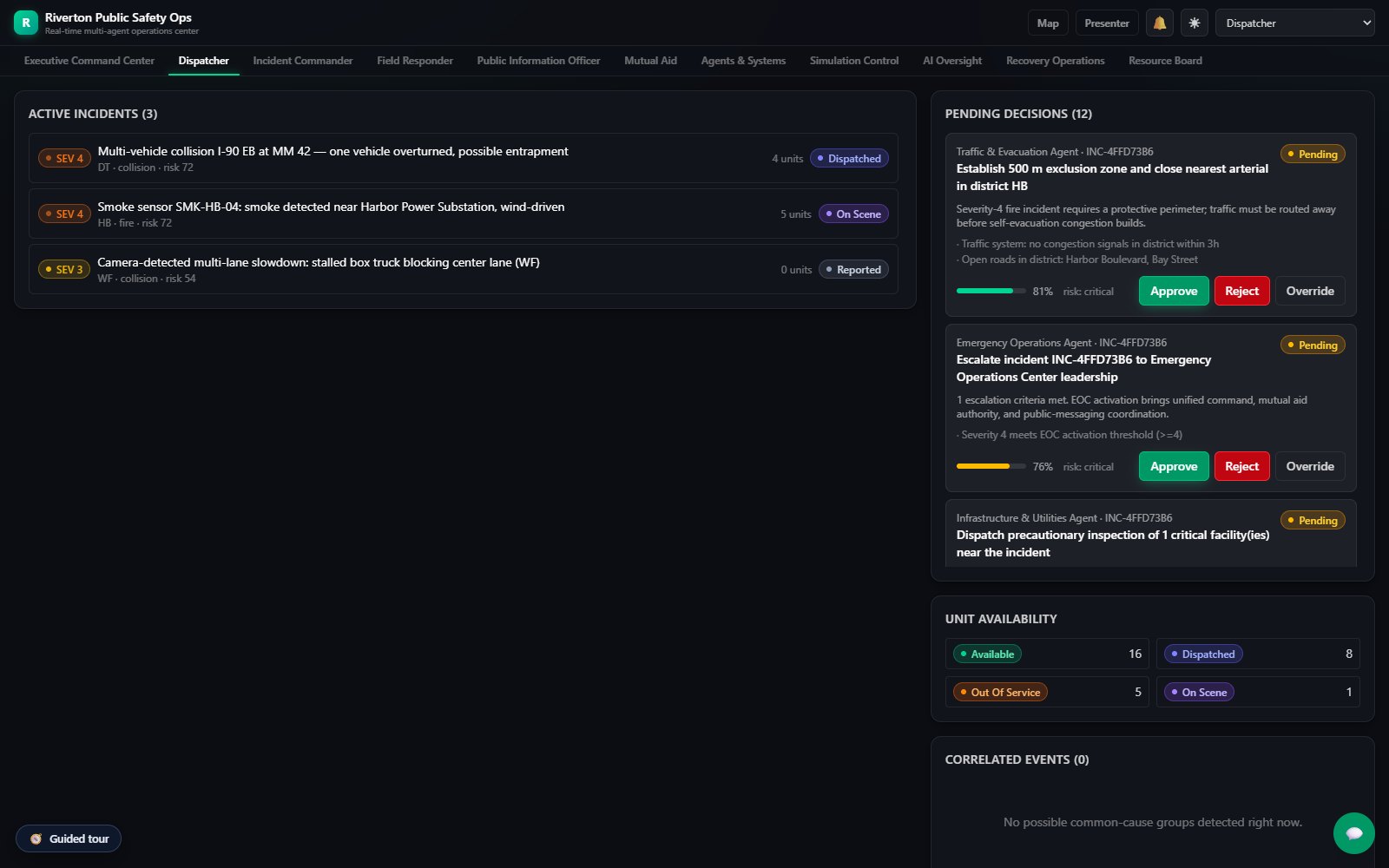 Dispatcher: incidents by status alongside pending agent decisions, each with its confidence, its evidence, and approve, reject or override.
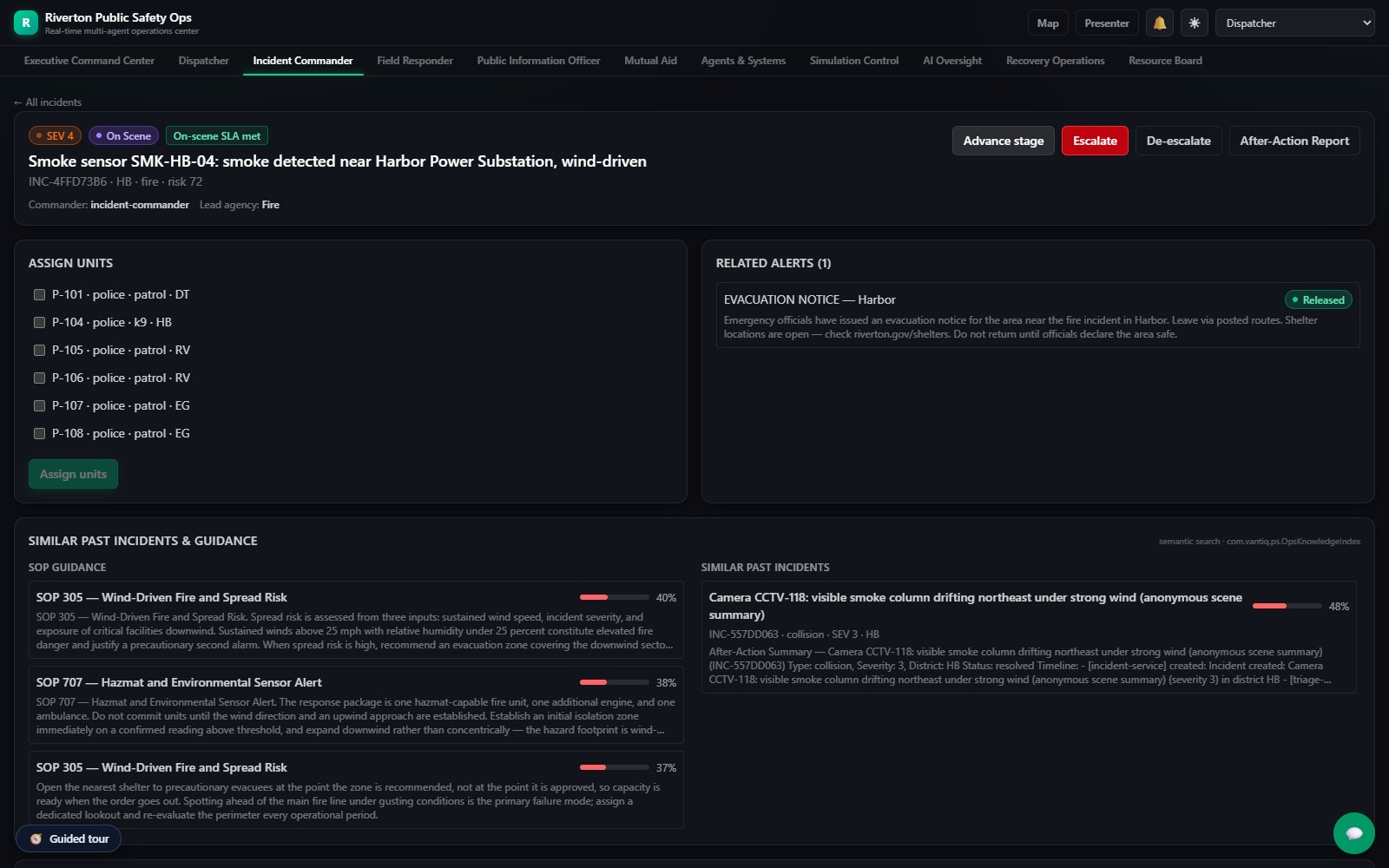 Incident detail: on-scene status against SLA, unit assignment, the released public alert, and the standard operating procedures retrieved for this incident with their match scores.
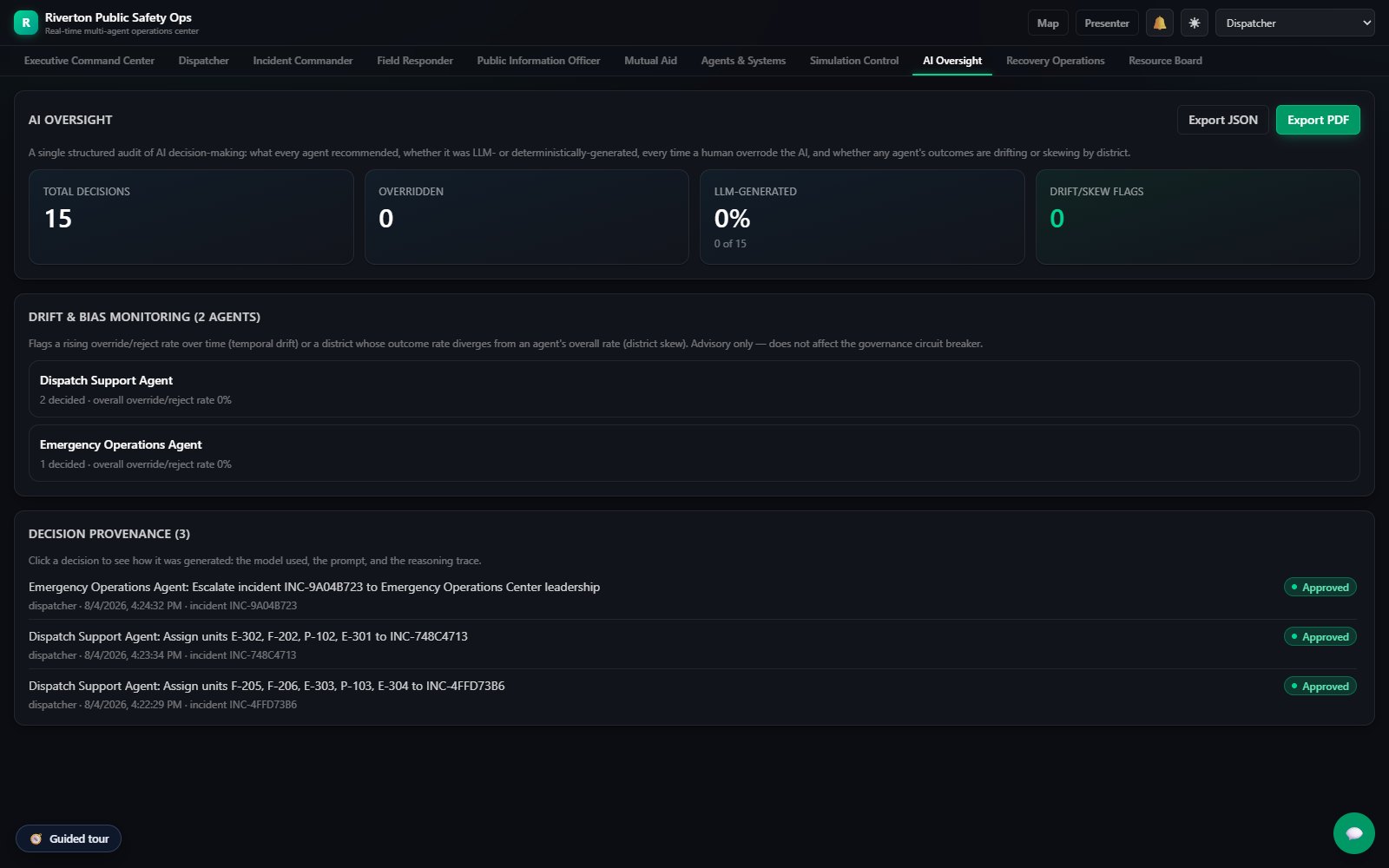 AI oversight: how many decisions the agents made, how many a human overrode, how much was generated rather than deterministic, plus drift and bias monitoring.
Want to walk a customer through this?
Demo environments are provisioned per partner. Request access and the team will set up a namespace you can run this in front of a prospect.
Request demo access
[email protected]